Long before photography became my medium, art shaped the way I learned to see.
I grew up surrounded by it. Paintings on the walls, books stacked high, conversations about artists, literature, and history woven into everyday life. My family included art historians and collectors, and from an early age I was immersed in a world where art was not simply decoration, but something living. Something studied, discussed, and felt.
It shaped me quietly at first.
How to notice light. How to study color. How to understand atmosphere. How to pay attention to the way emotion can live inside a frame.
Even now, when I photograph a wedding, I often find myself drawing from the same artistic language that first taught me how to see.
Not consciously, always. But instinctively.
I’ve always been drawn to movements that prioritize feeling.
The softness and ornament of Rococo. The grandeur and shadow of Baroque. The emotional landscapes of Romanticism. The fleeting, light-filled observations of Impressionism.
Each one has left its mark on me.
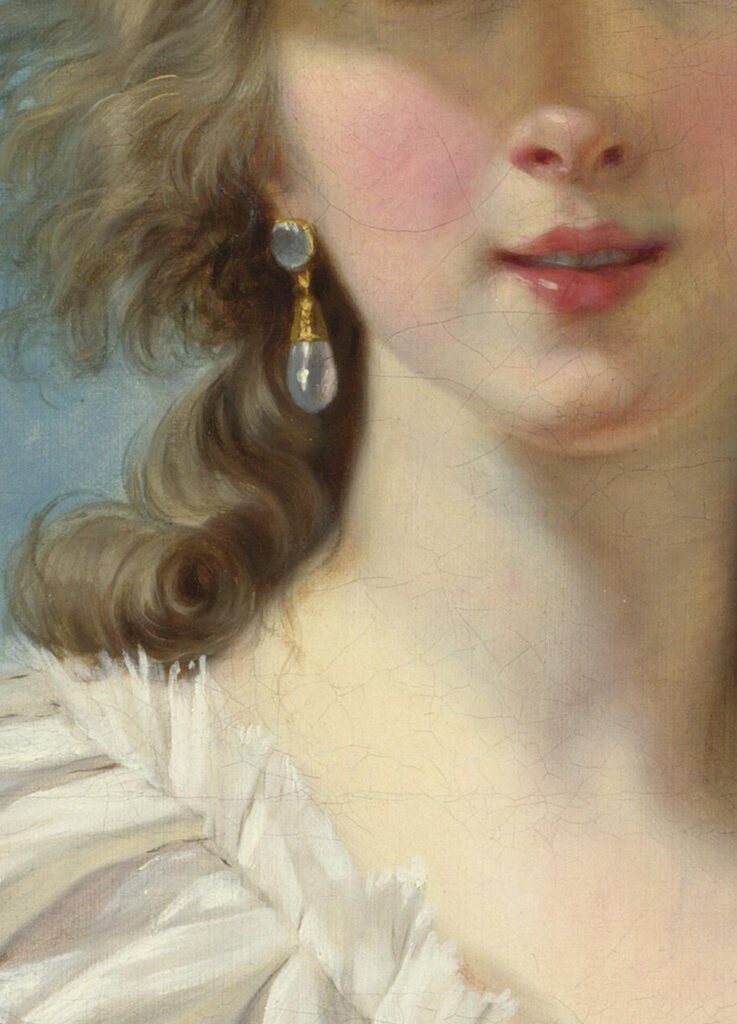
The Art History of Rococo, born in 18th-century France, has long inspired my attraction to softness and detail. Its pastel palette, decorative curves, and playful elegance continue to influence the way I think about composition and color. There is a femininity to it, a refinement, but also a freedom in its asymmetry that feels deeply alive.
Baroque, by contrast, taught me the power of, well, contrast.
Its ability to use light and shadow not simply to illuminate a subject, but to create drama, intimacy, and emotional gravity. In photography, light is never just practical. It is narrative. It guides the eye, shapes the mood, and often carries the emotional weight of the image itself.
Romanticism gave me permission to chase feeling over perfection.
Its emphasis on emotion, imagination, and the sublime has deeply influenced the way I document weddings. Not as perfectly arranged sequences, but as emotional landscapes unfolding in real time. The anticipation before a ceremony. The stillness before guests arrive. The way a hand reaches for another without thinking.
These moments matter because they are felt before they are seen.
And perhaps most of all, I return to Impressionism.
Its relationship to light has always felt closest to photography itself.
The Impressionists understood that no moment is ever repeated exactly the same way. The same place, the same subject, the same landscape could transform entirely depending on the hour, the weather, the quality of light. Claude Monetpainted the same scenes again and again because each version held a different truth.
That idea has stayed with me.
A wedding is much the same.
A fleeting gathering of people, emotion, atmosphere, and light that will never exist in quite the same way again. The way sunlight falls through a window. The movement of a veil in the wind. The expression on a father’s face during a quiet moment no one else notices.
These are not just moments to document.
They are moments to preserve as they were felt.
And that is what I am always reaching for in my work.
Not simply beautiful images, but images that hold nostalgia. That carry feeling. That remind you not only of how something looked, but how it lived in your body at the time.
I want my photographs to feel like memory. Layered. Emotional. Textural.
Like art you can return to, years later, and still feel something stir. Because in many ways, that has always been the purpose of art.
To hold onto what would otherwise be lost.
V


